Question 1 of 10
The image shows the human respiratory system. Which structure is the primary site of gas exchange? 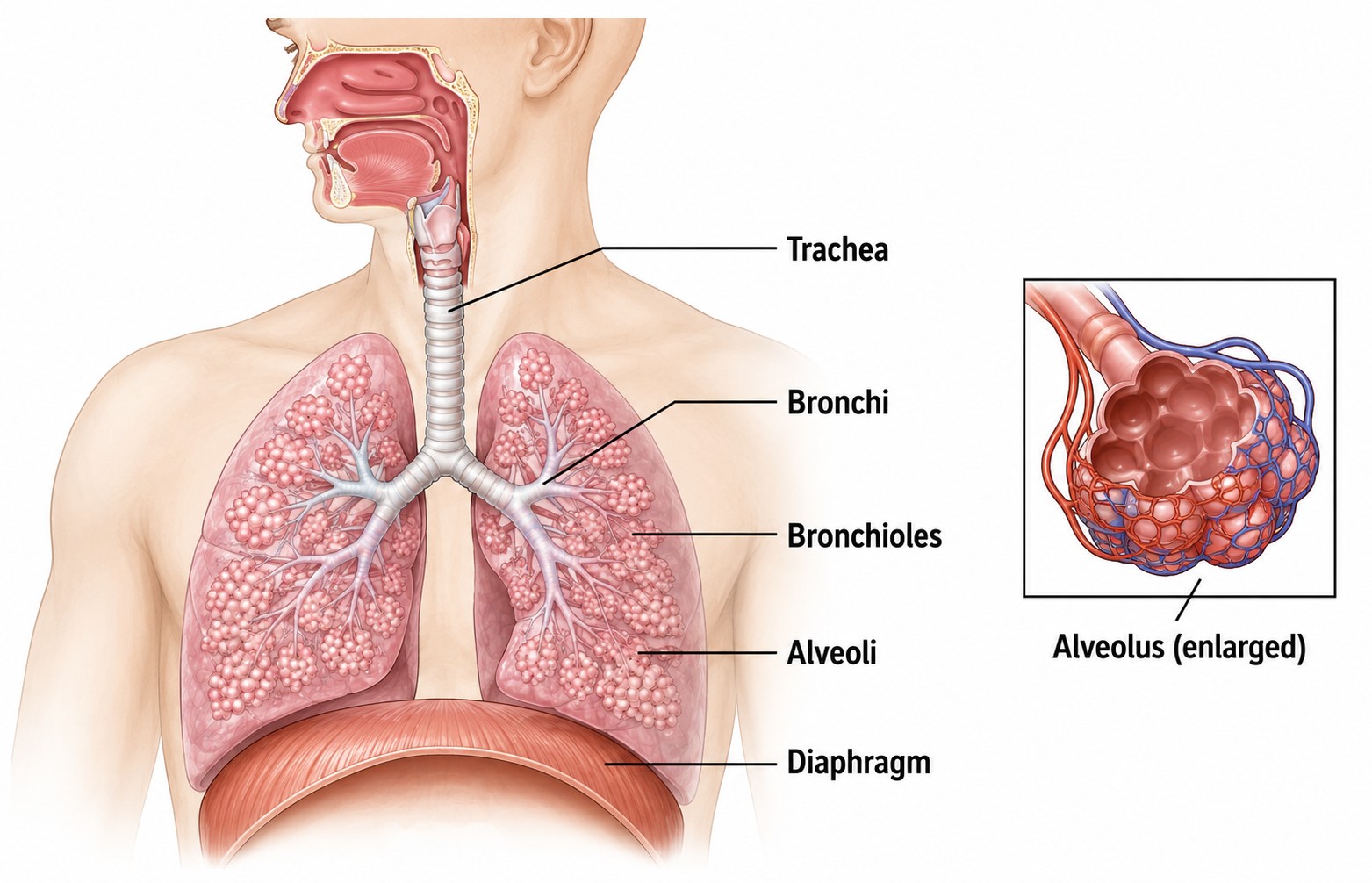
ABronchi
BAlveoli
CLarynx
DTrachea
Explanation
Gas exchange (O₂ ↔ CO₂) happens at the alveoli, where their thin walls allow gases to diffuse between air and capillary blood.
Question 2 of 10
For AA × aa, what is the genotype of all offspring?
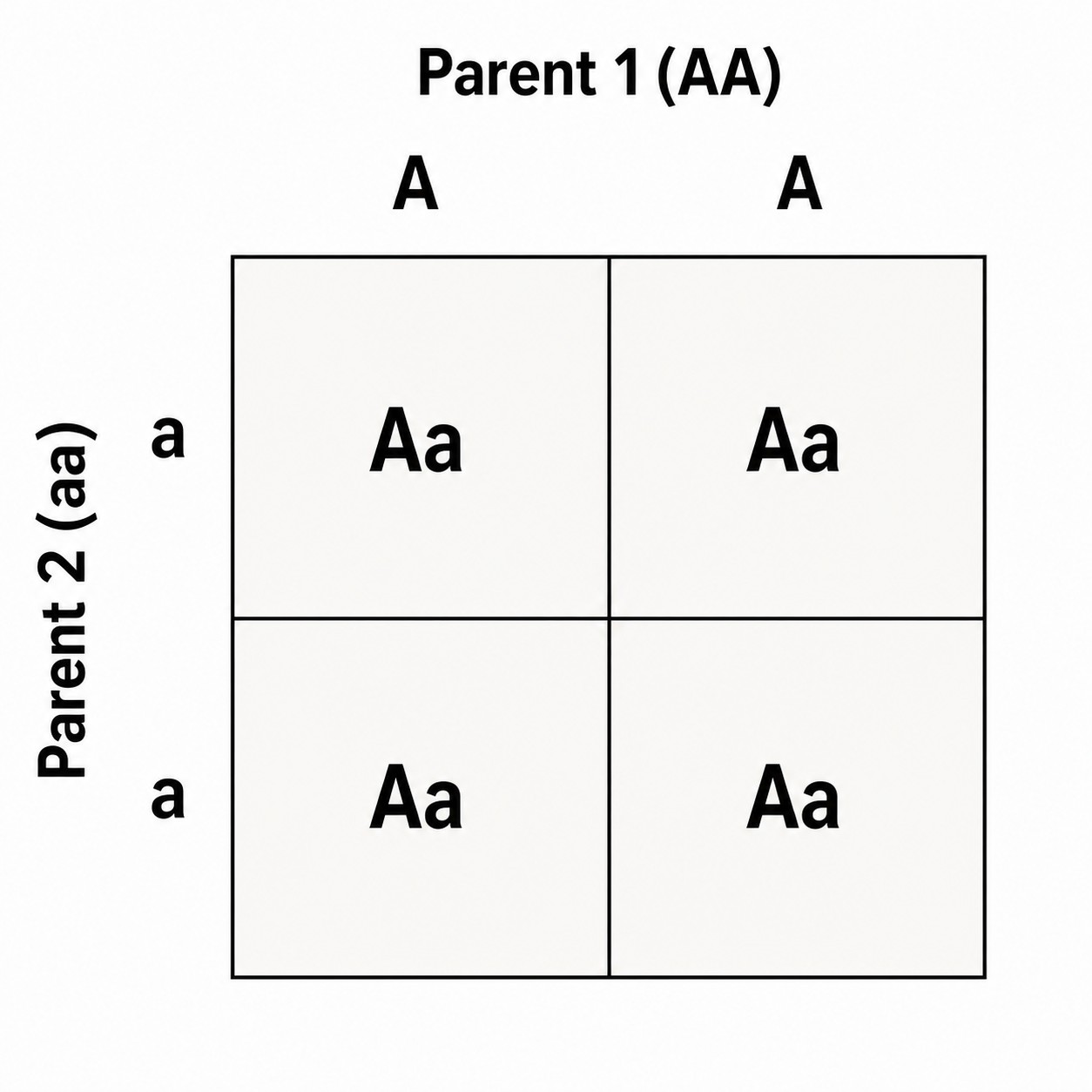
AAll AA
B1 AA : 2 Aa : 1 aa
CAll aa
DAll Aa
Explanation
Each parent contributes a different homozygous allele → 100% Aa heterozygous.
Question 3 of 10
Lipids store roughly twice as much energy per gram as carbohydrates. Which property of lipid molecules best explains this?
AThey contain more nitrogen atoms than carbohydrates
BLong hydrocarbon chains contain many C–H bonds that can be oxidized to release energy
CThey are insoluble in water, so they take up less space when stored
DThey form longer polymer chains than carbohydrates
Explanation
Lipid fatty-acid tails are long chains of carbon–hydrogen bonds. Oxidizing each C–H bond releases energy, so the more C–H bonds per gram, the more energy is stored. Carbohydrates have fewer C–H bonds per carbon because oxygen atoms are already attached. Distractors: water insolubility relates to *where* lipids are stored, not how much energy they hold. Lipids aren't true polymers. Lipids contain almost no nitrogen — that's a feature of proteins and nucleic acids.
Question 4 of 10
Why does the left ventricle have a thicker muscular wall than the right ventricle?
AIt must pump blood at higher pressure to reach the entire body
BIt is in direct contact with the lungs
CIt contains valves that the right ventricle lacks
DIt receives more deoxygenated blood from the body
Explanation
The left ventricle pumps oxygenated blood through the *systemic circuit* — every tissue in the body — which requires high pressure. The right ventricle only needs to push blood a short distance to the lungs (pulmonary circuit), so its wall is thinner. Distractors: the left ventricle pumps *oxygenated* blood, not deoxygenated. Both ventricles have valves (AV and semilunar). The right ventricle, not the left, is closer to the lungs.
Question 5 of 10
Which monomer–macromolecule pairing is CORRECT?
AFatty acids → nucleic acids
BGlucose → lipids
CAmino acids → proteins
DNucleotides → carbohydrates
Explanation
Amino acids are the monomers that polymerize via peptide bonds to form proteins. Distractors: Glucose is a monosaccharide — it builds *carbohydrates* (starch, glycogen), not lipids. Nucleotides build *nucleic acids* (DNA, RNA), not carbohydrates. Fatty acids combine with glycerol to form *lipids*, not nucleic acids.
Question 6 of 10
Which pair of processes drives the most direct exchange of CO₂ between living organisms and the atmosphere?
APhotosynthesis (absorbs CO₂) and cellular respiration (releases CO₂)
BTranspiration (releases CO₂) and condensation (absorbs CO₂)
CNitrogen fixation (absorbs CO₂) and decomposition (releases O₂)
DPhotosynthesis (releases CO₂) and cellular respiration (absorbs CO₂)
Explanation
Photosynthesis consumes atmospheric CO₂ to build glucose (CO₂ → sugar), while cellular respiration breaks glucose back down to CO₂ and water. Together they form the short-term carbon cycle between the biosphere and atmosphere. Distractor B reverses the direction. Transpiration moves water vapor, not CO₂. Nitrogen fixation moves nitrogen, not carbon.
Question 7 of 10
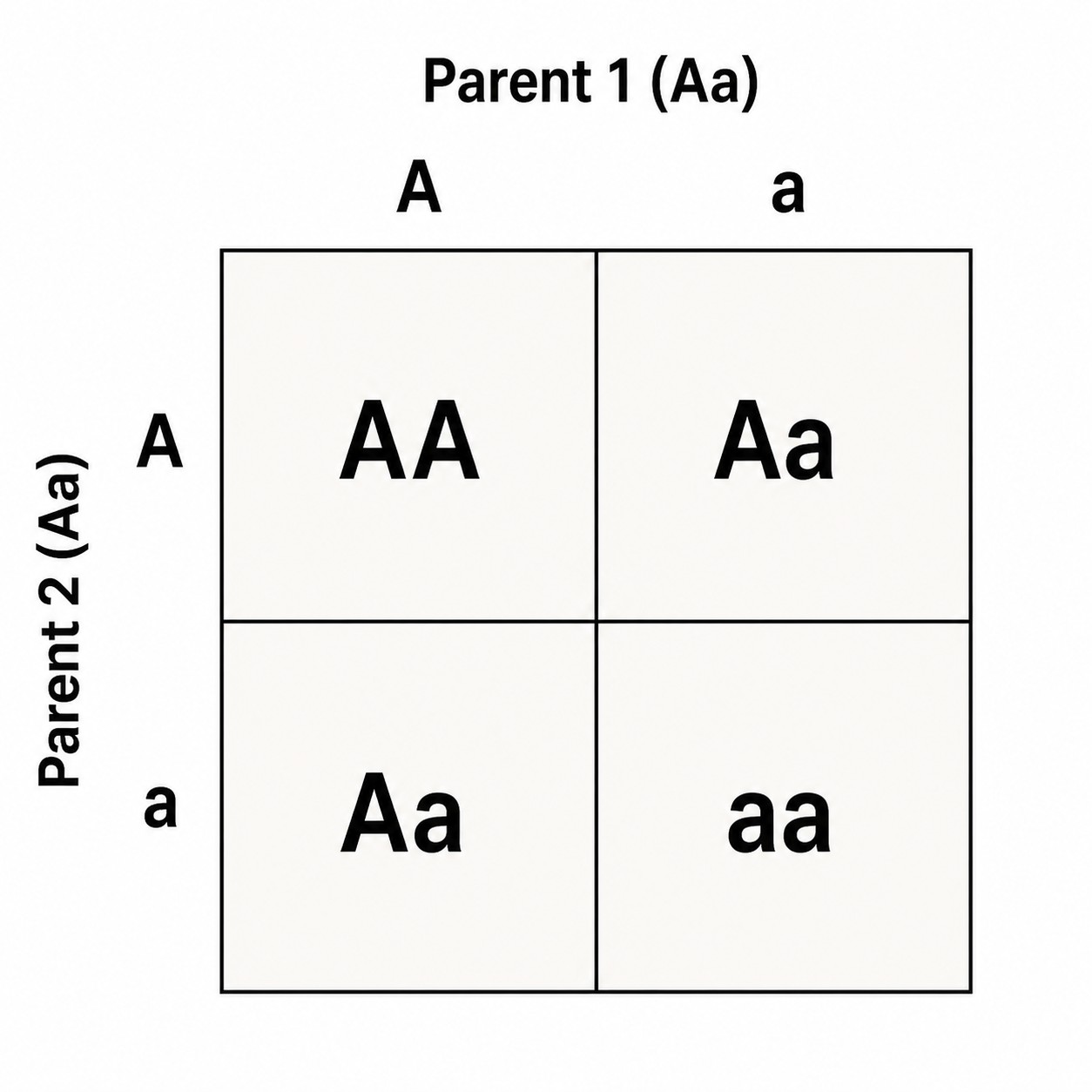
Use the Punnett square to determine the probability of offspring with the homozygous recessive (aa) genotype.
A1/2 (50%)
B1/4 (25%)
C3/4 (75%)
D0
Explanation
Aa × Aa cross: AA, Aa, Aa, aa. Only one box (aa) shows the homozygous recessive: 1/4 = 25%.
Question 8 of 10
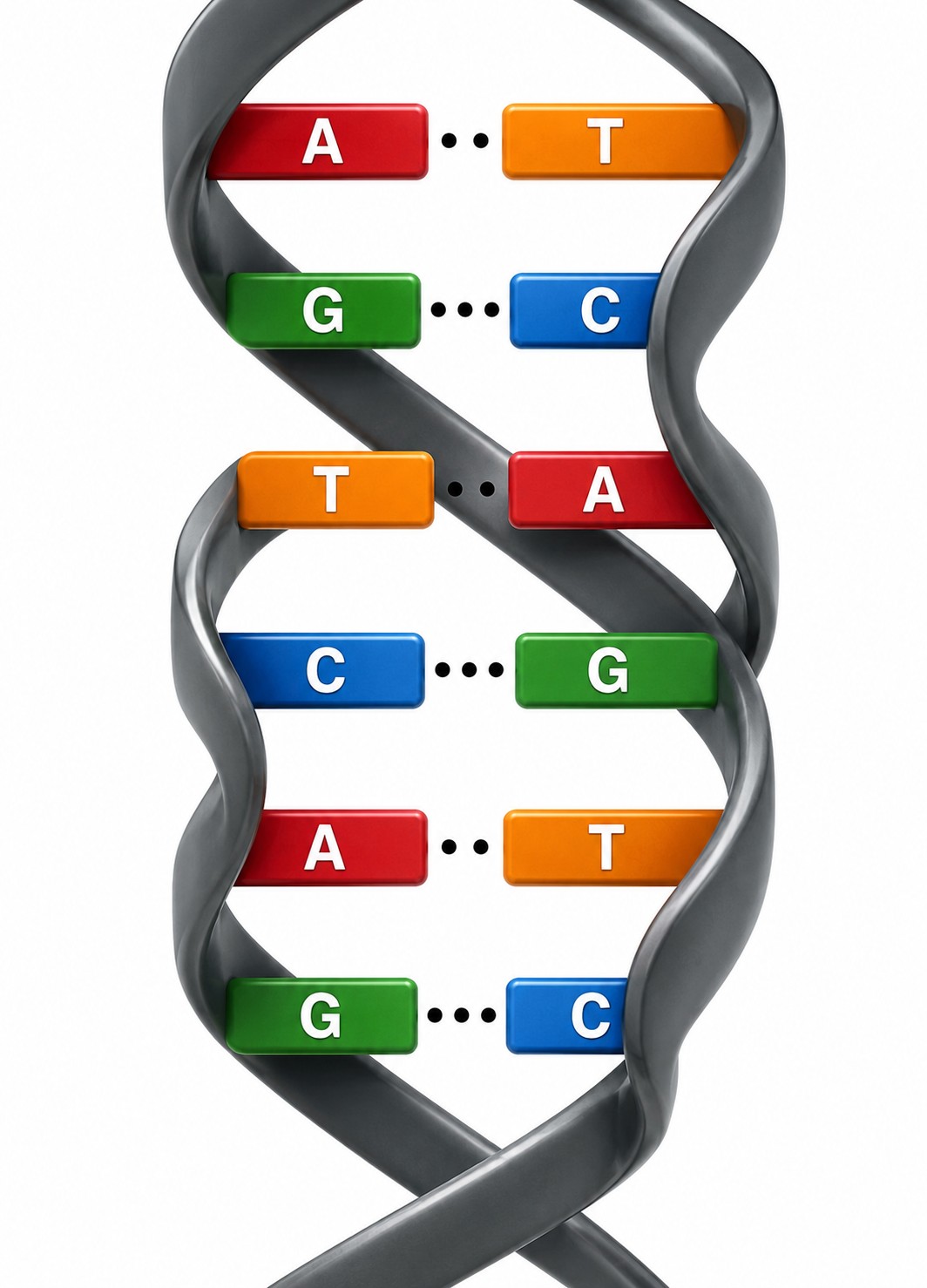
The DNA double helix is shown. Which base pairs are correctly bonded?
AA pairs with C, and T pairs with G
BA pairs with T, and G pairs with C
CA pairs with G, and T pairs with C
DAll bases pair with each other freely
Explanation
In DNA, complementary base pairing is strict: Adenine (A) – Thymine (T) via 2 hydrogen bonds; Guanine (G) – Cytosine (C) via 3 hydrogen bonds.
Question 9 of 10
Which class of biomolecule is built from nucleotide monomers?
ALipids
BNucleic acids (DNA and RNA)
CProteins
DCarbohydrates
Explanation
Nucleic acids (DNA, RNA) are polymers of nucleotide monomers — each nucleotide is a phosphate + sugar + nitrogenous base. Distractors: Proteins are polymers of *amino acids*. Carbohydrates are polymers of *monosaccharides* (e.g., glucose). Lipids are not true polymers — they assemble from fatty acids and glycerol but don't repeat a single monomer.
Question 10 of 10
In the food web below, what would happen if all the frogs were removed? 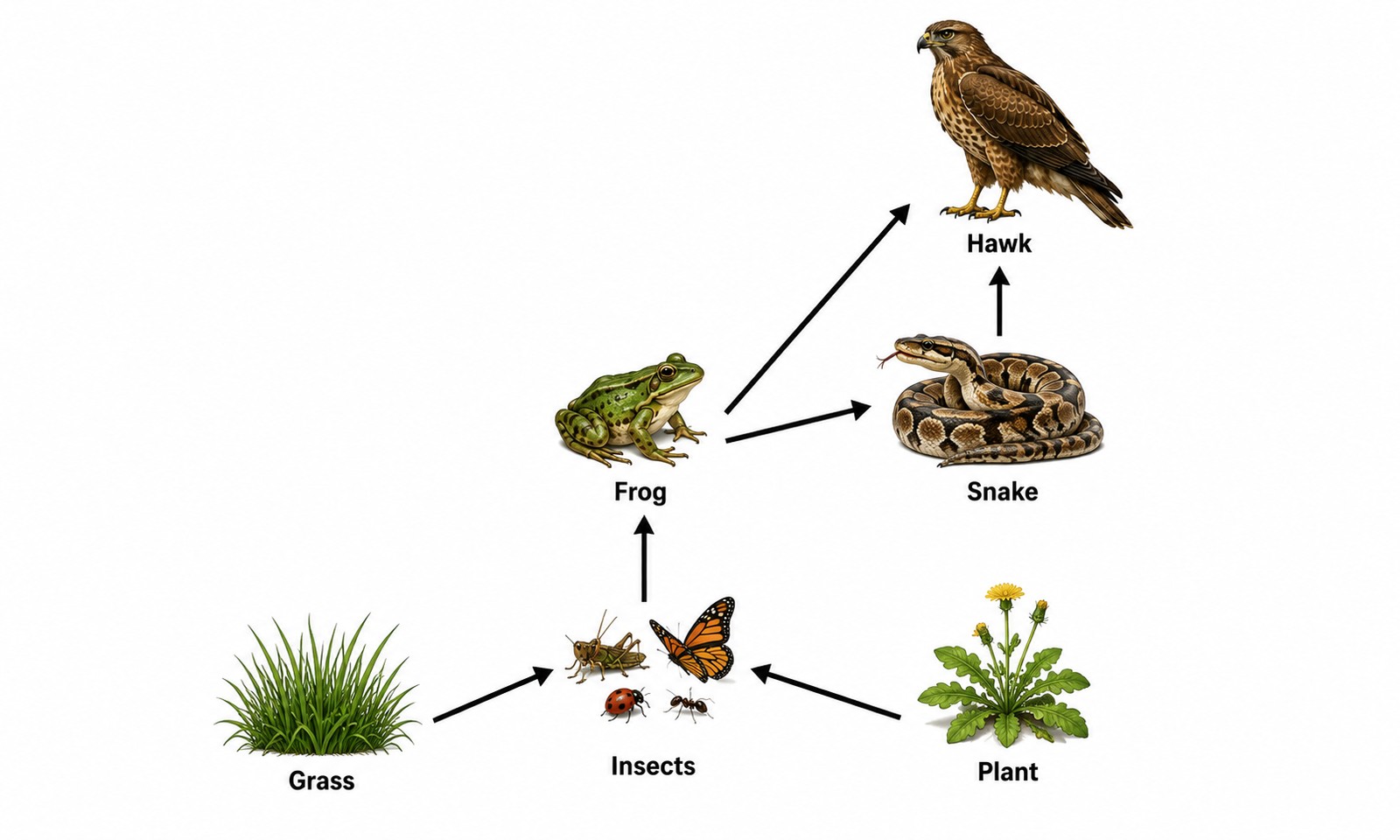
ASnake population increases
BAll organisms die
CNothing changes
DInsect population increases and snake population decreases
Explanation
📌 If frogs are removed:
• Insects (grasshoppers) they ate would INCREASE (no predator)
• Snakes that ate frogs would DECREASE (less food)
• This demonstrates how removing one species affects the entire food web.
• Insects (grasshoppers) they ate would INCREASE (no predator)
• Snakes that ate frogs would DECREASE (less food)
• This demonstrates how removing one species affects the entire food web.